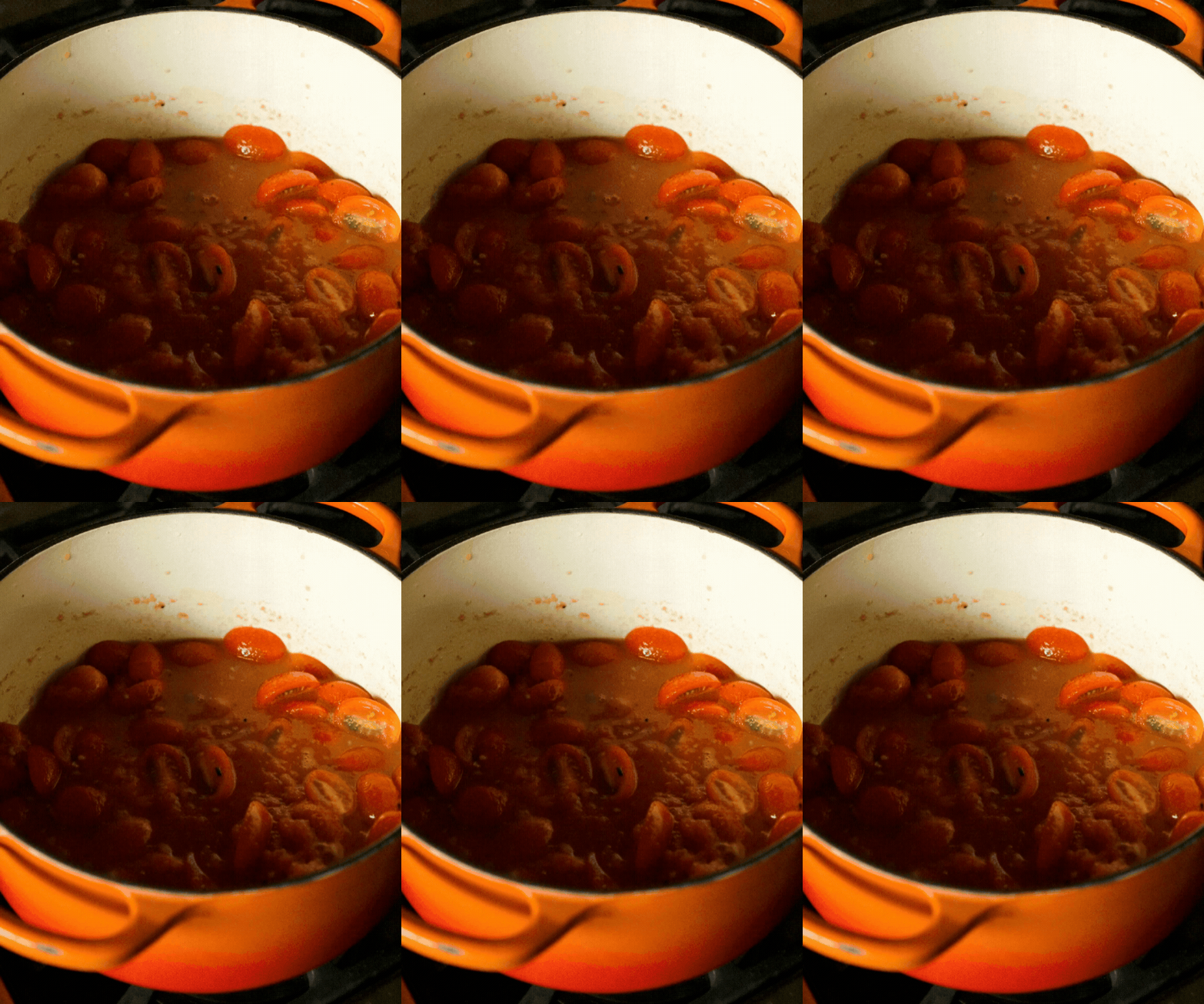




The collection began in the kitchen of the MYJN Galerie house, while preparing a simple dish of pasta. We found ourselves wondering why pasta comes in so many shapes and what these familiar forms reveal about Italian food culture.
Our curiosity led us to regional traditions, where ingredients, tools and recipes helped shape the pasta we know today. Looking closer, we saw small sculptures in their curves, folds and twists, and began to imagine them as playful yet elegant jewellery for daily life.
This study offers a first taste of La Petite Cuisine, a jewellery collection imagined as a menu, from softly folded croissants to curling pasta and petite bunches of grapes. Here, we begin with the pasta shapes that first stirred our curiosity.

Shape 1: Orzo
Small, smooth and grain-like.
The Italian word orzo means barley, a name inspired by the pasta's small, grain-like form. In Italy it is also often called risoni, meaning large grains of rice. Orzo belongs to the wider family of pastina, the tiny pasta shapes traditionally cooked in broth. Rather than having one clearly documented birthplace, it is part of a broader Italian tradition of making small pasta for comforting, spoonable dishes. Orzo is at its best in broths, with lemon and olive oil, or cooked slowly with stock in the style of risotto.
The Character of Form
Orzo resembles a small grain of rice, with an elongated body, a gently rounded centre and two tapered tips. We are drawn to its fine proportions and flowing outline, tracing possibilities for jewellery design within this familiar grain. Its silhouette can become a delicate detail or shape an entire piece.

Shape 2: Fusilli Bucati
Long, and freely curled.
Fusilli Lunghi Bucati comes from the pasta traditions of Campania in southern Italy. The name fusilli is linked to fuso, the Italian word for spindle, while bucati describes the hollow channel running through the pasta strand. Traditionally, a fine length of dough was wound around a slim rod or knitting needle, creating the shape's open spiral by hand. Its long coils suit generous sauces such as Neapolitan ragù, ragù alla Genovese, or tomato with aubergine and peppers.
The Character of Form
Long and slender, fusilli bucati draws a loose curl through the air. Its hollow centre and open spiral give the form a sense of lightness, while rounded contours and rhythmic twists reveal a different silhouette with every turn. This fluid shape offers a natural reference for sculptural jewellery, inspiring curves that follow the body and bring a gentle sense of motion to each piece.

Shape 3: Paccheri
Wide, tubular and made to hold
Paccheri is a large tubular pasta from Campania, closely associated with Naples. Its name comes from the Neapolitan word paccarià, meaning an open-handed slap, possibly referring to the sound the broad tubes make when served. Also known as schiaffoni, paccheri may be smooth or finely ridged, with a wide opening made to gather sauce or hold a filling. It pairs naturally with slow-cooked ragù, rich tomato sauces, seafood, or ricotta and cheese in baked dishes.
The Character of Form
Paccheri takes the form of a broad, short cylinder, with rounded edges and a generous open centre. Its scale gives the shape a clear silhouette, while subtle irregularities soften its geometry and suggest something formed by hand. These qualities inspire minimalist jewellery designs with rounded surfaces and gently uneven edges, balancing solid volume with open space. One form creates a distinctive detail, while several together bring a gentle rhythm.

Shape 4: Cellentani
Coiled, hollow, and fine ridged.
Cellentani has an unusually modern story. The shape is generally traced to Barilla in the 1960s, when a pasta die intended to make straight tubes produced spirals instead. The result became known more widely as cavatappi, the Italian word for corkscrew. Barilla named its version cellentani after the Italian singer Adriano Celentano, whose lively stage manner suited the pasta's spring-like form. Its ridges and hollow centre suit creamy cheese or tomato sauces, while its compact curl also works well in pasta salads.
The Character of Form
Cellentani curls into a compact spiral, its rounded tubular form traced with fine ridges that follow each turn. There is a little rhythm in its shape, like a spring holding movement within its curves. In jewellery design, these contours become a study of volume, texture and open space, offering inspiration for fluid forms with a sense of motion. A single curl can shape a small detail or become the whole silhouette, carrying a familiar form from the kitchen to the body.

La Petite Cuisine Collection, 2026
From Our Table to Yours
Orzo, fusilli bucati, cellentani and ditalini are each a little less familiar at the tables around us. Their minimalist forms lend themselves naturally to everyday jewellery, carrying a little of the kitchen’s charm into the way we dress. Served in sterling silver, gold vermeil, silver plated brass and 18k gold plated brass, these pieces are small offerings from our table to yours.
We imagine every jewel as a little souvenir from the Galerie kitchen, playful enough to bring a smile, delicate enough to rest gently against the skin, and timeless enough to return to each day. A familiar pleasure in an unexpected form, made to become part of your own daily rituals.
Discover the La Petite Cuisine jewellery collection online, or visit MYJN Galerie to explore the full collection in person.
Written on 8 September 2026, by MYJN