

Sterling Silver
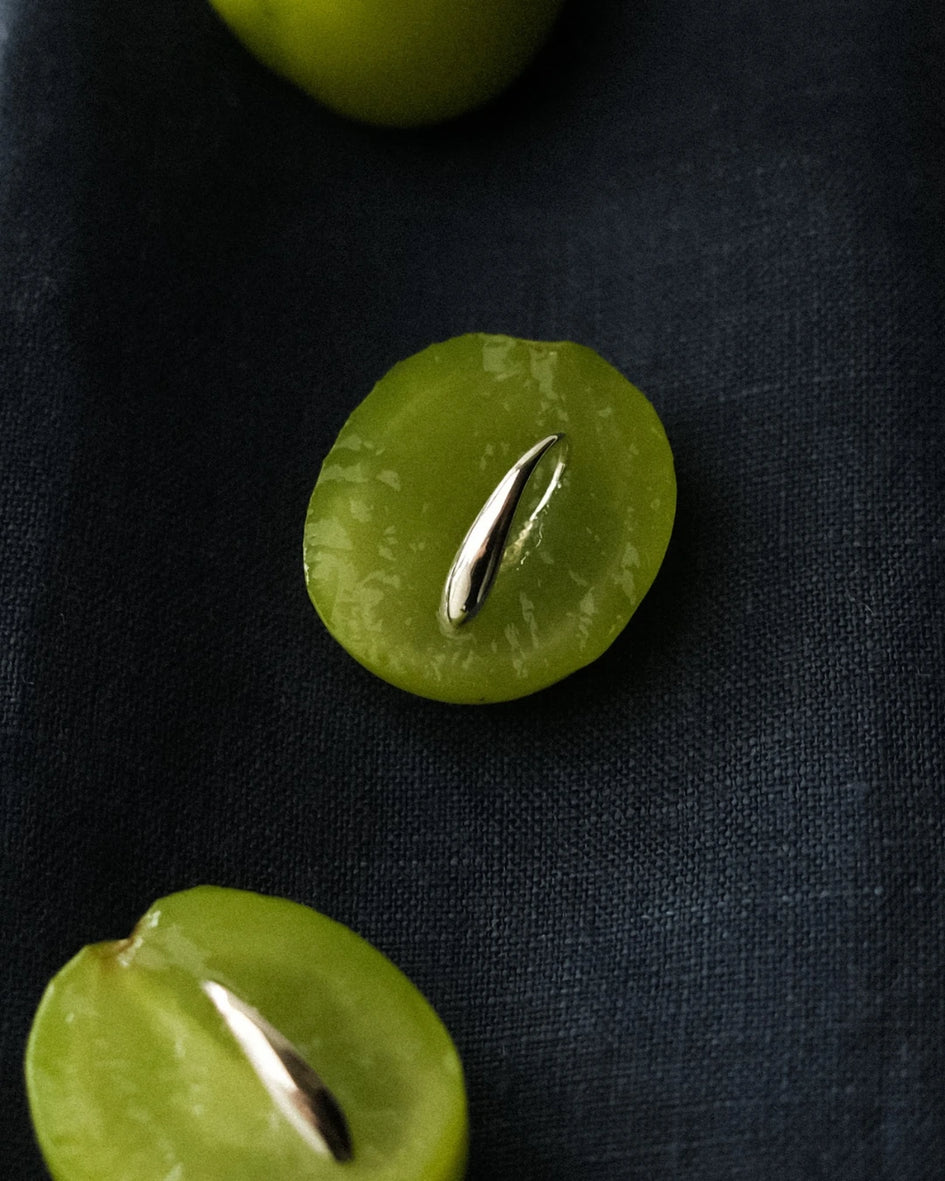
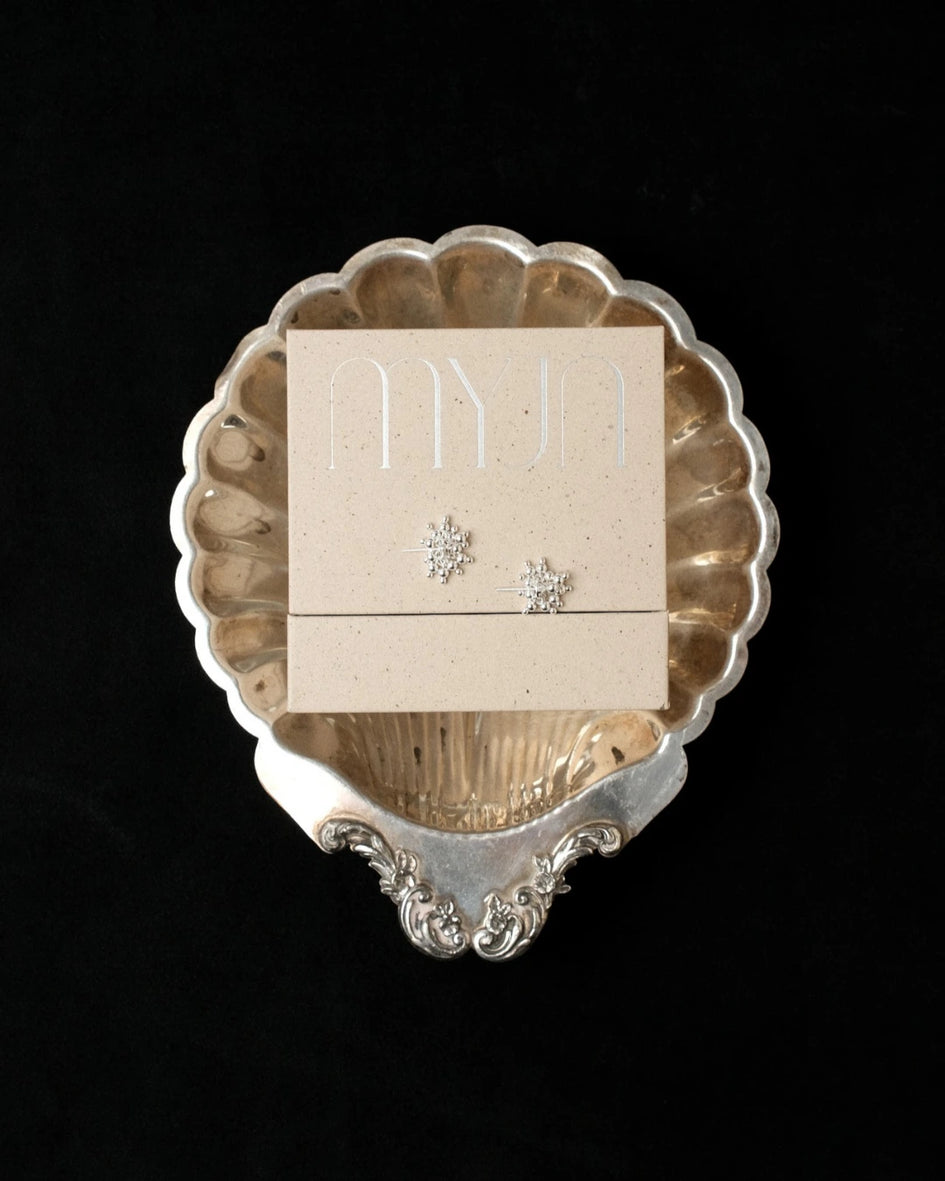
Ninety-two and a half parts silver to seven and a half parts copper. The copper gives silver a spine, which is why sterling is the metal for the forms that need structure. It darkens slowly in air and faster in sweat and humidity. Every sterling piece leaves with a clear e-coat that slows the darkening, so it is wiped gently rather than polished with treated cloths; some pieces are finished in rhodium, which reads a shade cooler than bright silver and is meant to.
Gold Vermeil
MYJN vermeil is real 18-karat gold, at least 2.5 microns thick, over sterling silver. It gives the piece its gold colour while keeping a precious-metal base beneath. We add a clear e-coat to help protect the finish. Gold is more resistant to tarnishing than exposed silver, but the finished piece is not immune to changes. Over time, friction can thin the gold at the points of greatest contact, gradually allowing the silver beneath to show. A sudden or uneven change is something we would like to see.
Fine silver
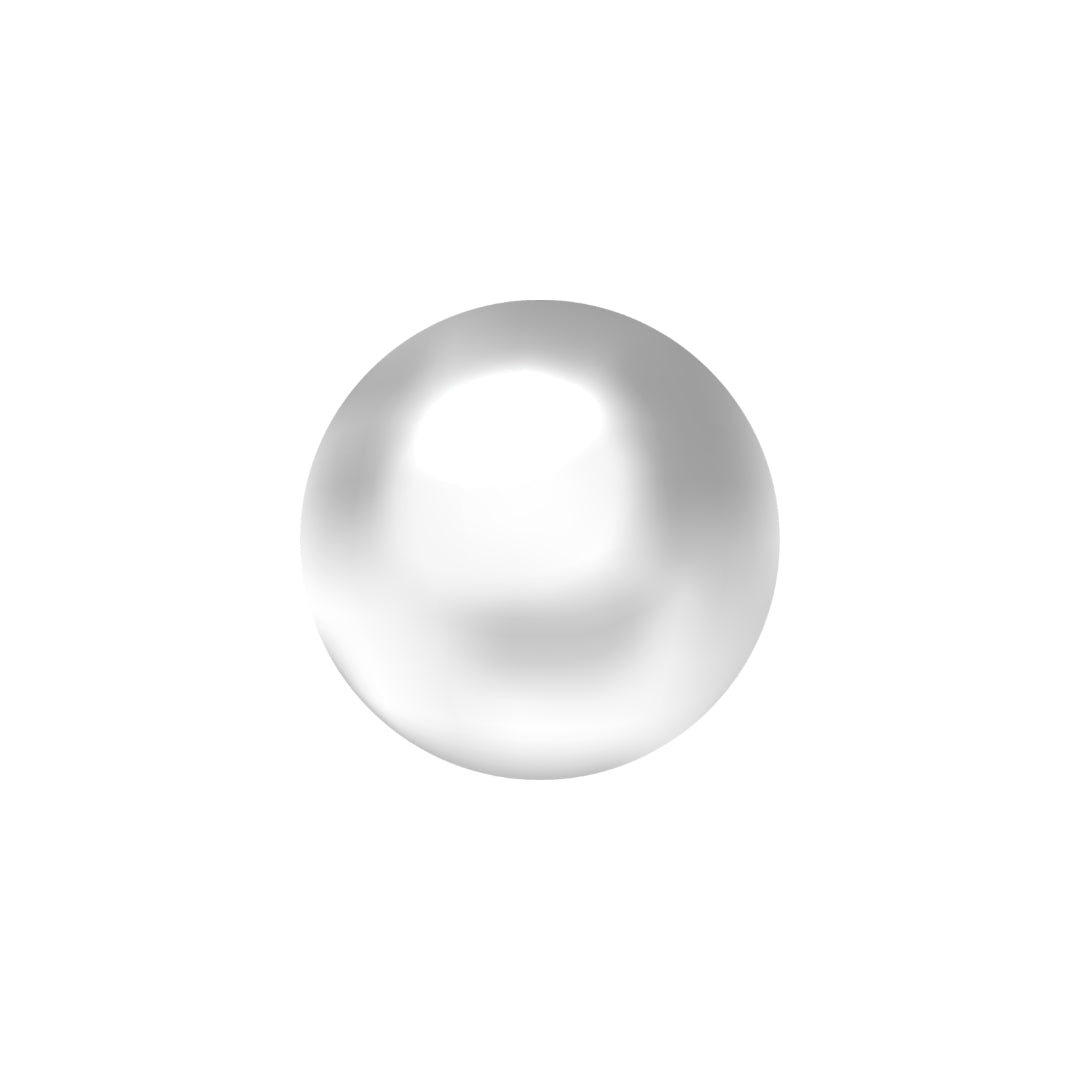
Ninety-nine parts silver or more. Softer and whiter than sterling, used where the Atelier needs a wire to move or a surface to glow rather than hold. Fine silver tarnishes more slowly, because there is less copper in it to react, and it bends more willingly, which is a property and not a fault. A fine-silver piece is worn with a lighter hand and is never squeezed to change its fit.
Solid Gold
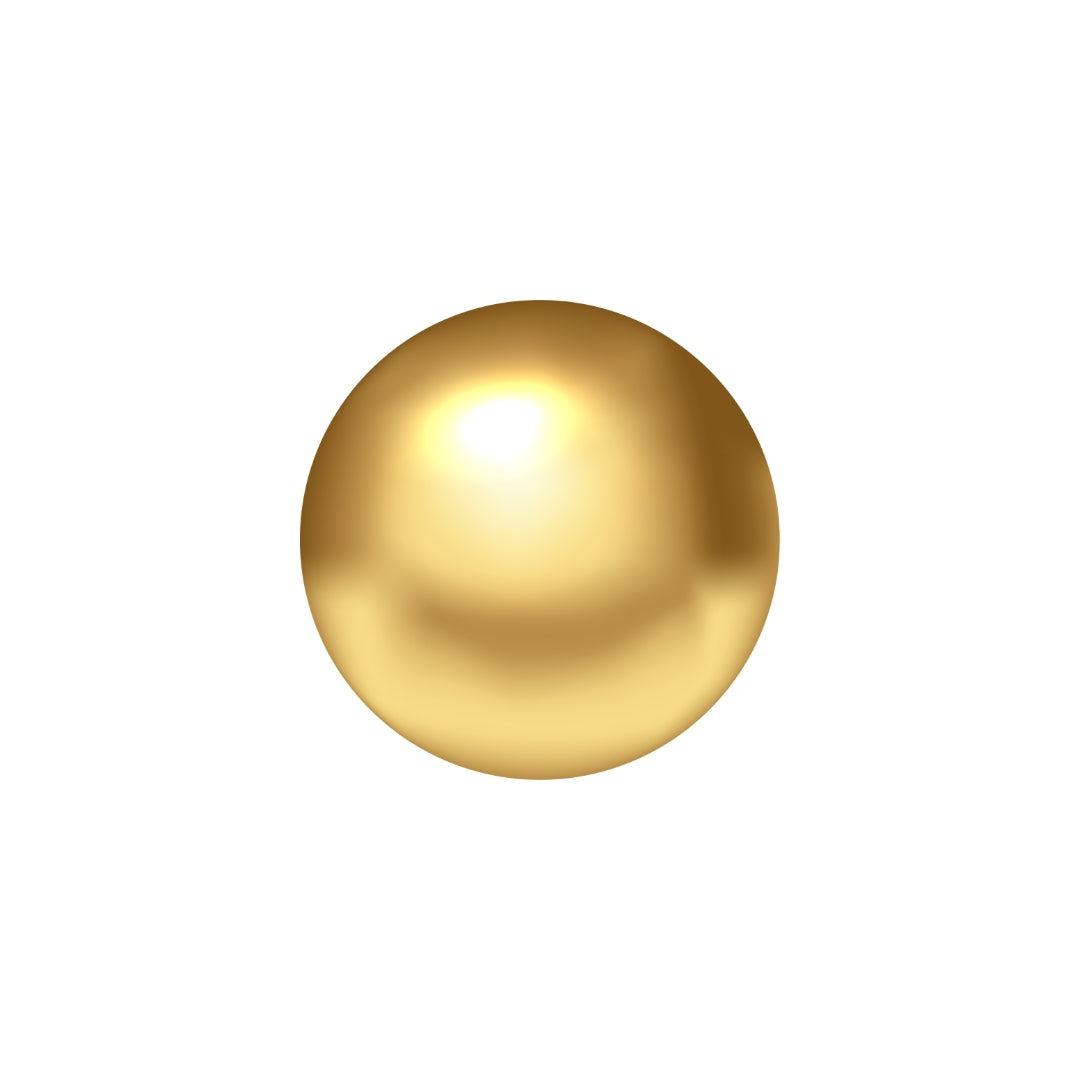
Some MYJN pieces are solid 18-karat gold, containing 75% gold throughout, and are named as such on their product pages. There is no applied gold layer to wear through. The alloy can still scratch or change in appearance with use, so wipe it gently and store it separately.

Steel
Stainless steel belongs to the MYJN archive. Earlier pieces used 304 or 316L stainless steel, sometimes called titanium steel in the trade. We moved towards silver and plated brass for the forms and finishes we wanted to develop. Steel still scratches and wears, and a water-resistant metal does not make every part of a piece suitable for swimming. For an archive piece, follow its original material information or ask us for care advice

Brass
Brass, an alloy of copper and zinc, is the metal that lets a first piece cost less without being hollow. Here it is never bare: every brass piece is plated in real silver, 18-karat gold or rhodium, then e-coated, so what meets the skin is the same surface as on the silver pieces. The page always says when a piece is brass, and its care is the care of its finish, never brass polish.


WHAT IS ON THE SURFACE
Our sterling silver, fine silver, vermeil and plated-brass pieces receive a clear e-coat to help protect the finish, and every piece is wiped with an anti-oxidant before it is packed. Some silver pieces also have a rhodium finish, identified on their product pages. We offer additional anti-tarnish treatment and, where suitable, a clear lacquer sealant. These treatments do not make jewellery waterproof or guarantee that sensitive skin will not react. Pearls, stones and horn need their own care.
On Water
We do not describe MYJN jewellery as waterproof or impermeable. Remove it before showering, swimming, hot springs and exercise. Chlorine, salt, personal-care products and prolonged water exposure can affect finishes and other parts of a piece, including thread and elastic. If jewellery gets wet, blot it gently and let it dry fully before storing. The care of a piece includes what holds it together.
WHAT WILL HAPPEN
A piece changes through use. Gold plating can gradually wear thinner at points of contact; silver can darken; protective coatings can wear. Natural pearl, stone and horn can vary in appearance from one piece to another. If a change is sudden, uneven or unfamiliar, or a fitting feels loose, stop trying to clean or adjust it and send us a photograph. We will help you work out what it needs.
HOW A PIECE IS HELD
A jade bead is tougher than the elastic through it; a pearl is softer than the wire it hangs from; an acetate comb is one bonded body with stones seated in it. Hold a piece by its fastening, never by a bead, a stone or a fine wire. Keep thread and elastic out of water and do not stretch them further than putting the piece on requires. Do not keep bending a post or a wire to straighten it; put the piece aside and write. The Antoinette's wire was chosen from five for how it moves; it was not chosen to be reshaped at home.

Sustainably grown
Pearls
Pearls are the house's longest love, and the widest range on the site. Cultured freshwater pearls, from rounds to baroques, matched by hand. Near-round freshwater pearls with the look people associate with Akoya; they remain freshwater pearls, and the page says so. Peacock freshwater pearls, whose green and aubergine lustre is a colour, not an origin. Seawater pearls: Akoya, where a piece names it, and Tahitian, with their dark lights. Mother-of-pearl, the lining of the shell, cut and polished. And crystal pearls, which are made rather than grown, and are named as such wherever they appear. A grown pearl's surface is nacre laid down by a living animal, the most alive and most delicate material on this page: perfume dulls it, sweat etches it, wearing and wiping keeps it.
We source from partners we have worked with long enough to trust with our name. We cannot trace every step between the earth and your hands. What we can do is stay small enough that nothing enters this studio without being seen, held, and chosen by someone who will answer for it.

Ethically Sourced
Jadeite
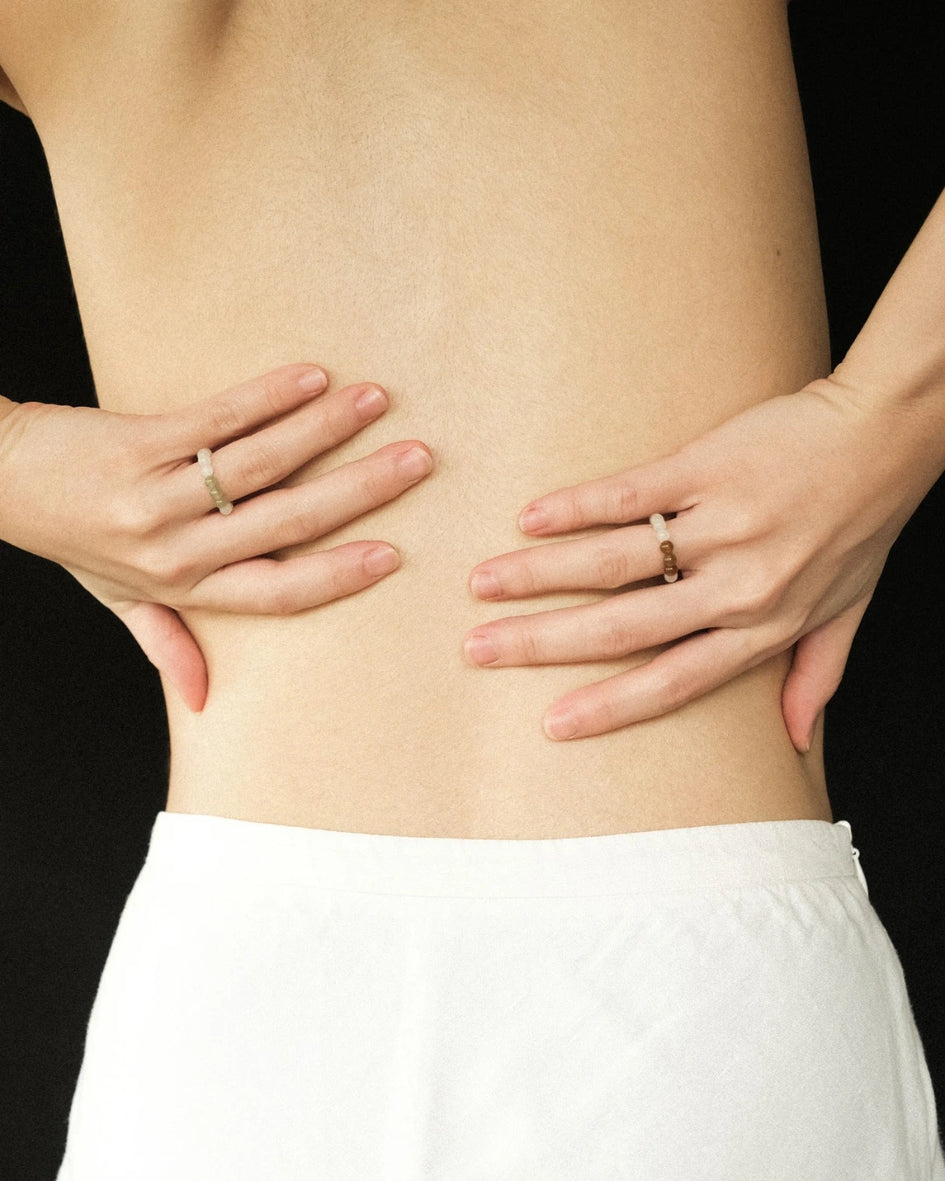
The jade here is nephrite: Hetian whites, the warm tones of Qiemo, and celadon greens. We choose it for its colour, texture and feel, allowing the variations of the stone to remain. Each product page names the material used. Jade is tough, but the wire, thread, elastic and fittings around it need gentler handling; care for the complete piece.
Natural materials, and cultivated ones, each named as such on its piece

Semi-Precious Stone
Beads
Lapis Lazuli
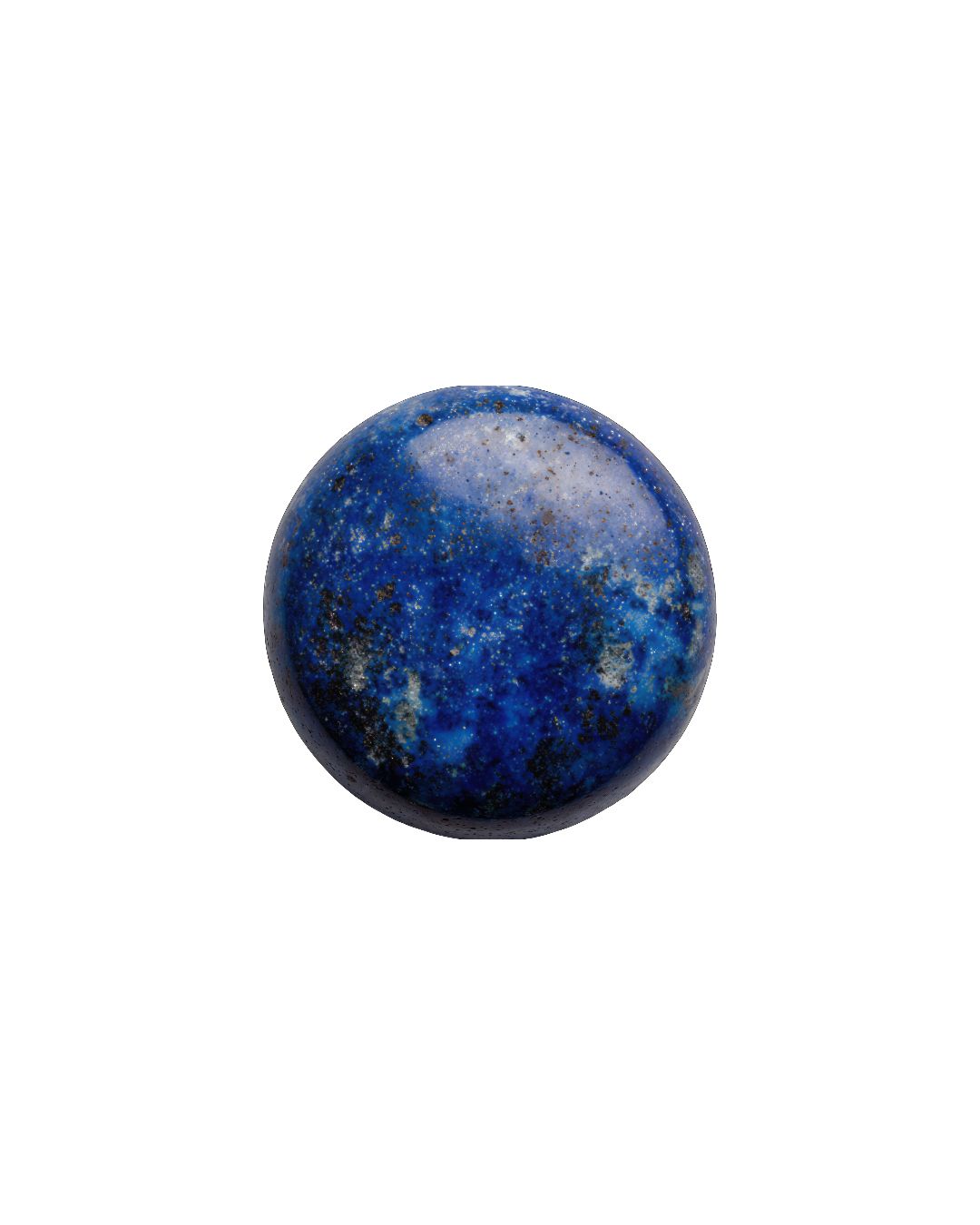
The lapis here is natural and never dyed, in the grade the trade prizes most: a deep, even blue with only a trace of pyrite gold and calcite white.
Black-lip oyster
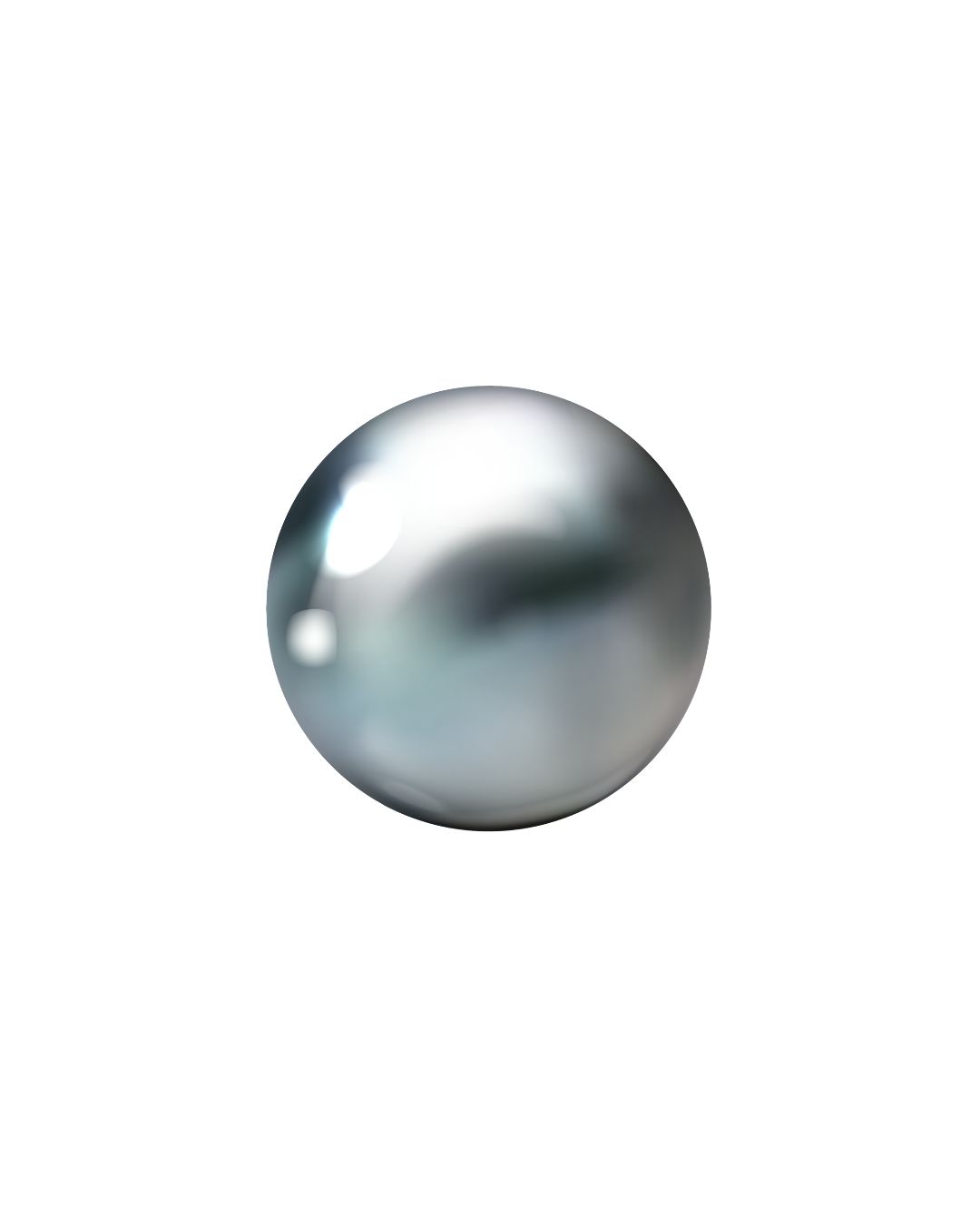
The shell of the black-lip oyster, the same oyster that grows the Tahitian pearl, cut and polished for its dark nacre: charcoal, silver and a green that moves as the light does. No two cuts match, and none is dyed. A soft, dry cloth, and nothing else.
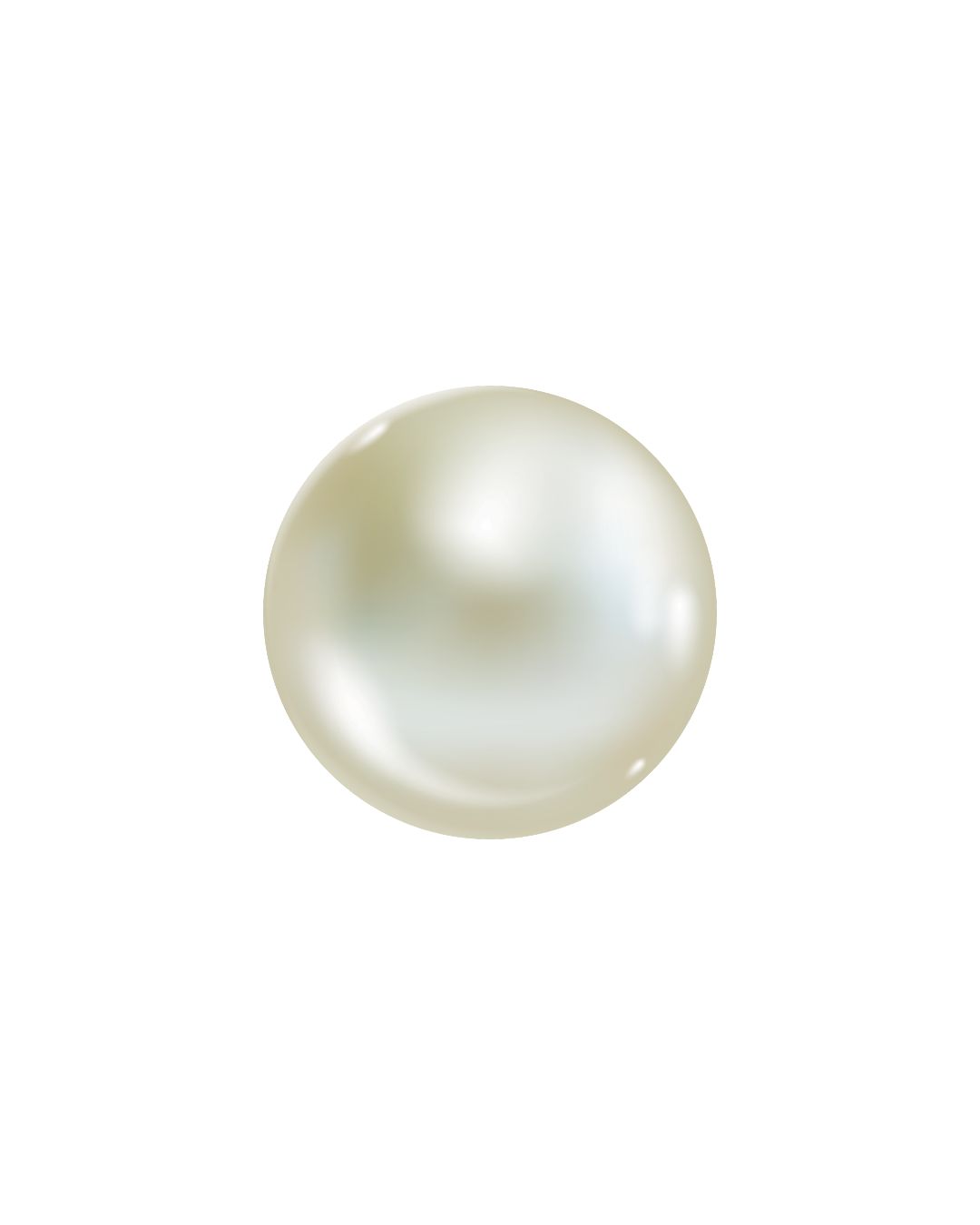
Mother of pearl
Mother-of-pearl is the inner lining of the shell, nacre laid down over years and cut flat. Here it is used uncoated, so the shimmer you see is the shell's own. It scratches more easily than stone and dislikes perfume; wipe it, and keep it from hard edges in the pouch.
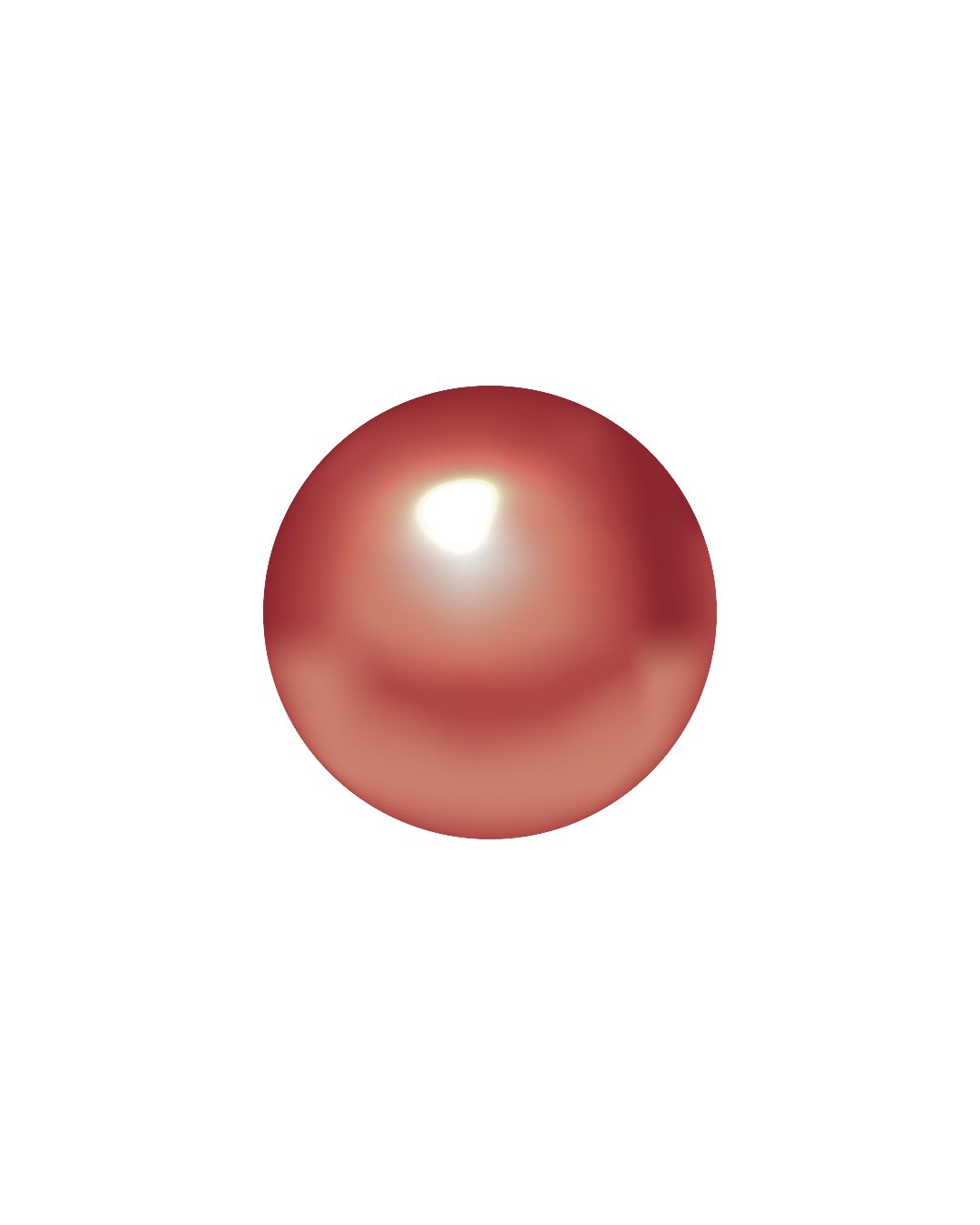
Red Agate
Red agate is banded chalcedony, warm and faintly translucent, hard enough for daily wear. Our pieces are natural and undyed, cut as cabochons and seated without claws. A barely damp cloth, dried.
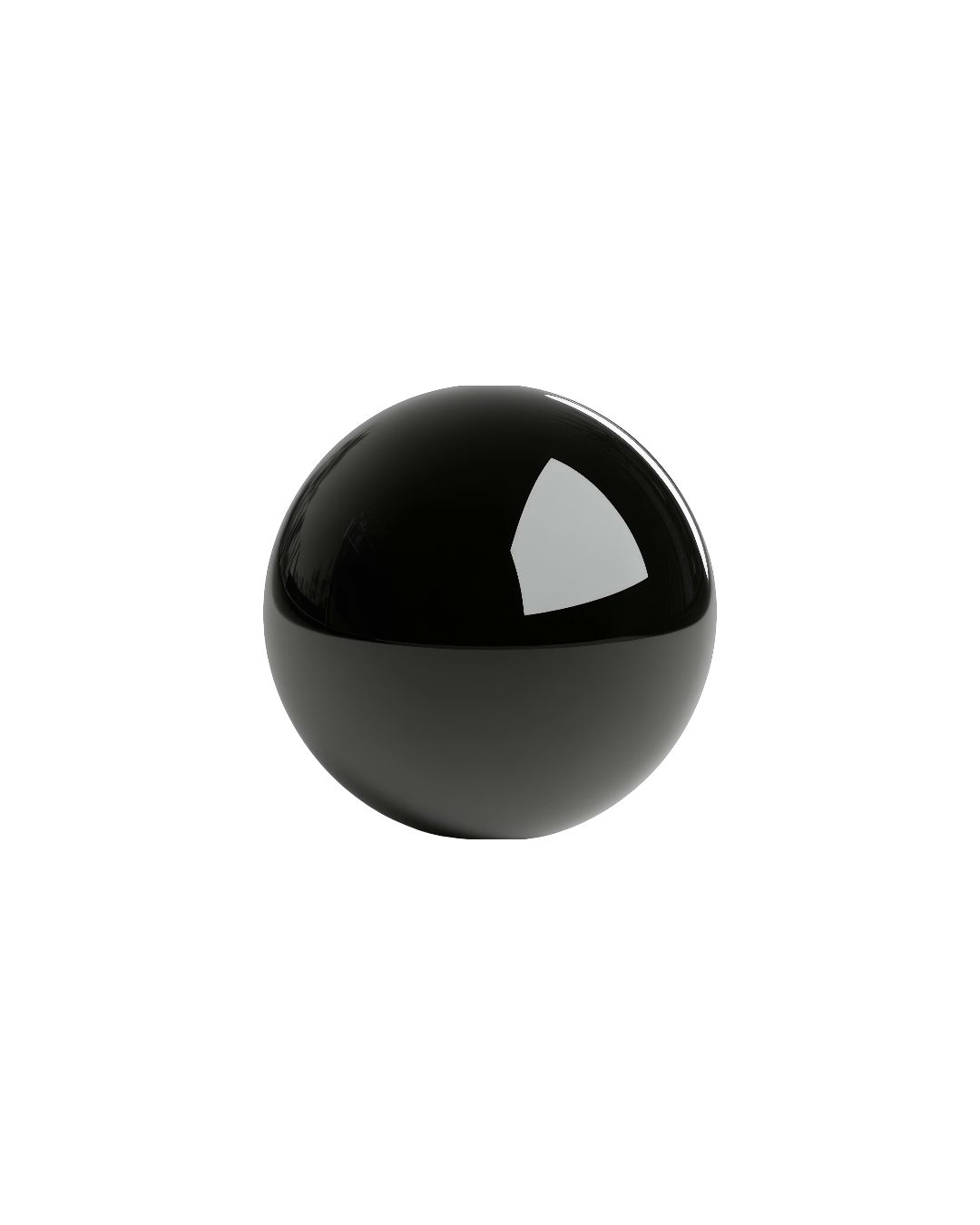
Black Agate
lack agate is the same stone in its darkest band, dense and even, with no fillers and no surface treatment. It takes a high polish and keeps it. A barely damp cloth, dried.
We are committed to ensuring all the materials we use meet our standards for environmental responsibility, fair work, and sourcing practices.
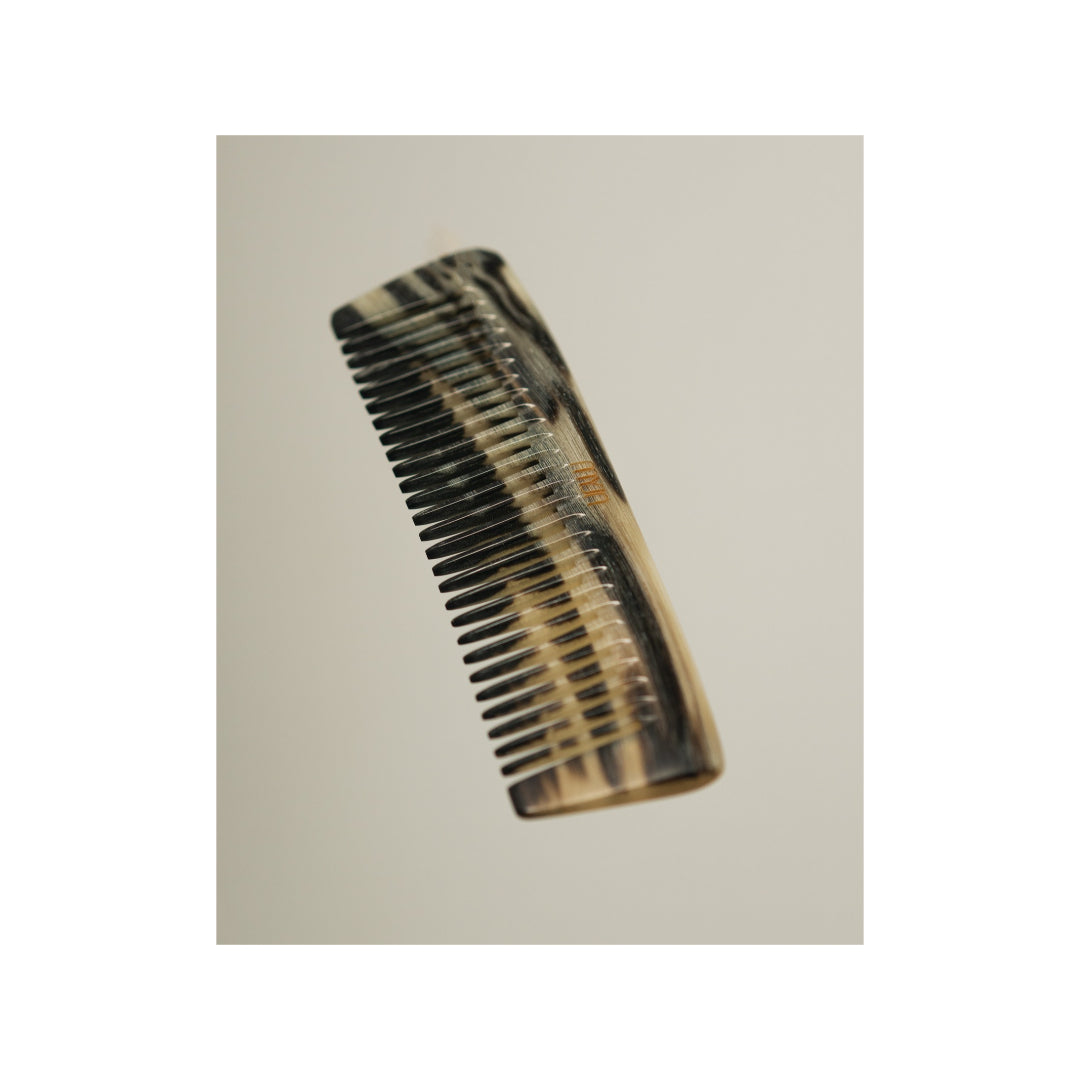
Horn and acetate
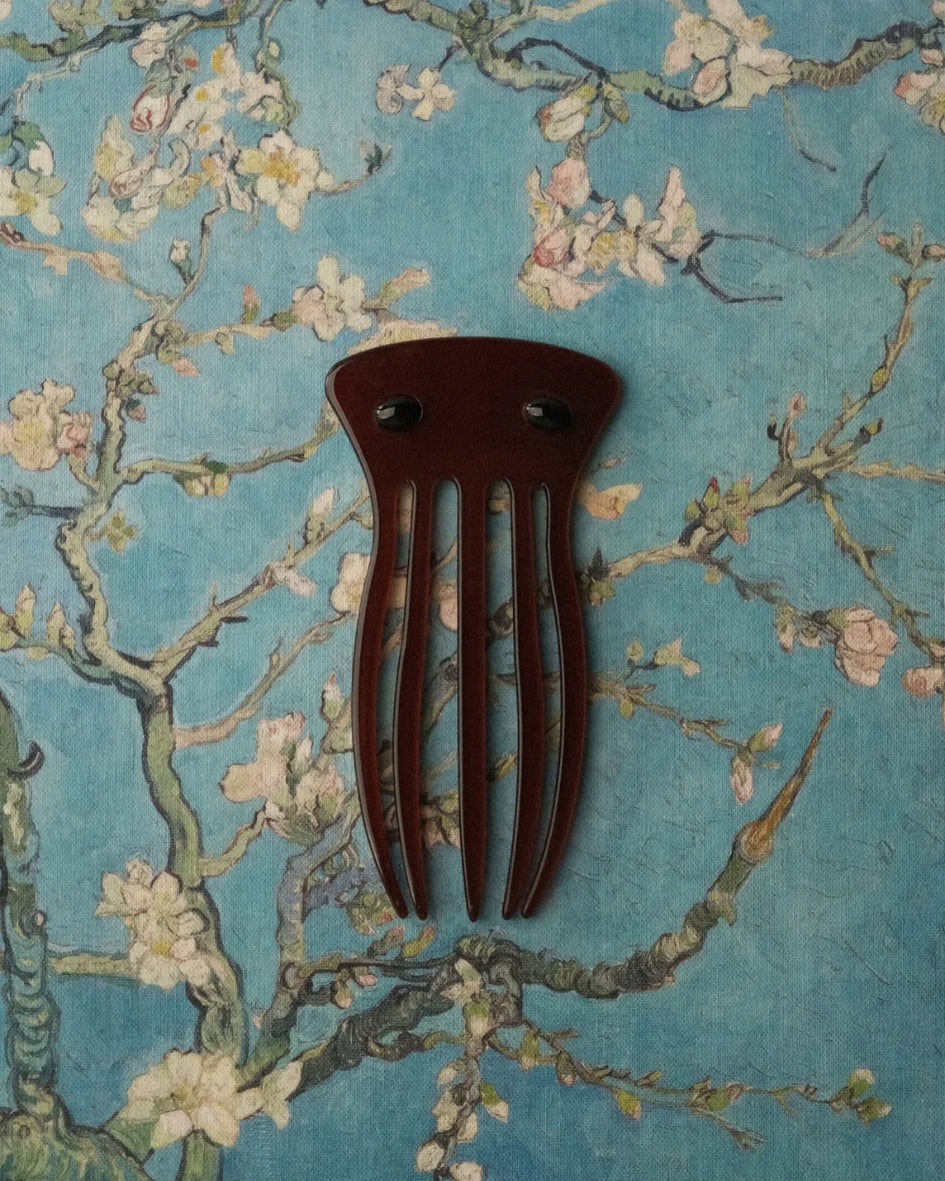
The combs are cut from natural horn, made of the same keratin as hair and behaving like it: heat warps it and long soaking lifts its layers. The horn patterns are chosen by hand at the house, and the gift combs are washed and polished by hand at the house.
Acetate is made from cotton and wood pulp, warm in the hand and bright in colour; in the Gardienne, red and black layers are bonded and set with agate, so the body, the teeth and the stones are one object and are cared for as one.

responsibly sourced
Leather

Grain Leather
Suede Leather
Where a piece uses leather, it is full-grain and left uncoated, so it keeps its markings and darkens with wear. Keep it dry, let it breathe, and let it age.

Suede
Vegan Leather
Vegan leather at MYJN is thoughtfully chosen — not just as an alternative, but as a material with its own character. Made without animal products, our vegan leather is smooth, durable, and designed to hold its shape with daily use. It offers a clean, minimal finish and a softer environmental footprint, without compromising on feel or function

Yarns
Textile

Silkworm
Silk
N
atural silk is unmatched in softness, sheen, and drape. Lightweight yet strong, it moves with a fluid elegance and feels cool against the skin. At MYJN, we use high-quality silk selected for its smooth texture and luminous finish — free from synthetic blends. Whether worn or wrapped, it adds a touch of quiet luxury that’s felt instantly.

Cotton
Linen
Linen is effortless by nature — breathable, textured, and quietly refined. Made from flax, it’s one of the oldest and most sustainable textiles in the world. At MYJN, we choose pure linen for its natural strength, airy feel, and lived-in softness that only gets better with time. Cool in summer, timeless year-round — it’s fabric with soul.
CARE
Every order includes a care cloth; the current edition is Magnolia, a vegan suede that can be used on both sides. Wipe with a clean area and light pressure, keeping the cloth free of grit. Do not scrub to remove a stubborn mark. Treated silver-polishing cloths and silver dips can damage coated or plated finishes. If gentle wiping is not enough, contact us before sending the piece for complimentary general cleaning.
The house finishes each piece after plating; you finish dressing before the piece. Last on, first off.
The house wipes each piece with an anti-oxidant; you put perfume, lotion, sanitiser and sunscreen on before it, never after, and let them dry. Keep your piece dry, remove rings before washing your hands, and blot gently if jewellery gets wet.
The house packs each piece in its own pouch; you store it there, apart from others, pearls laid flat.
The house checks each piece by hand; you wipe it after each wear with the cloth from the box.
The house holds a piece by its fastening when it works on it; so do you.
In a warm, humid climate, a simple routine helps: wipe after wear, let the piece dry, and put it away separately. Keep jewellery away from bathroom steam, direct sunlight and heat. Lay strung pearls flat and keep them away from silica gel or other drying agents. Apply sunscreen, perfume and lotion before putting jewellery on, and allow them to dry first.
Silver, vermeil, gold and plated brass: the Magnolia cloth, with a light hand. For residue, a cloth barely dampened with lukewarm water, then dry at once. Never a polishing cloth, never a dip.
Pearls and mother-of-pearl: a very soft cloth after wear; for residue, a barely damp cloth on the pearl itself, kept from its thread; never immerse, never brush; let any damp thread dry flat before storing.
Crystal pearls: a dry, lint-free cloth only; no alcohol or solvents on the coating.
Jade: a soft cloth, barely damp if needed, then dry; never soak the whole piece, because of what holds it.
Lapis and malachite: a dry cloth only.
Agate: a barely damp cloth, dried.
Horn and acetate: remove hair, wipe with a dry cloth; a barely damp cloth on the body if needed, away from the stones, dried at once; no heat, no hairspray, no solvents; if horn loses its polish or a stone becomes loose, contact us for assessment
Stainless steel (archive): a dry cloth; mild soap and water only on a plain uncoated piece without stones or thread.
A cool, dry place away from the bathroom's steam and the window's sun. Each piece in its own pouch, dried before it goes in. Chains closed and laid without tight bends. Pearls flat, never hung, never with a drying sachet. For travel, the MYJN box does the work it was made for.
What you see, and what to do
Silver gone dark: tarnish reaching through a worn coat. Wipe with the Magnolia cloth; if it stays, send it in for the free cleaning and, if you wish, the anti-tarnish process.
Gold looking lighter after years: vermeil wearing as vermeil does. Not a fault. Wear on, wipe gently. Gold lighter within weeks, or flaking: not normal wear. Stop cleaning it and write with a photograph.
A white fleck on a chain: the e-coat lifting at a link. Harmless; the anti-tarnish service can re-seal it.
A band bent, a post or clasp loose: wear or a knock. Stop wearing it and write; the Workshop repairs and reshapes.
A mark on the skin: sweat meeting copper, or a sensitivity. Wipe both, keep dry, stop wearing if the skin complains, and ask about the lacquer sealant.
A pearl gone dull: perfume or sweat. Wipe, keep it flat in the pouch, restring when the silk loosens.
A stone loose on a comb: adhesive aged. The Workshop re-seats it.
Horn or jade not matching the photograph: nature.
For dark silver, lighter gold, marks on skin and other changes, see Changes you may notice in the Questions below.
Services
General cleaning, in the house or by post, free for as long as you own the piece; write first, so the house can tell you what the piece needs.
An additional anti-tarnish and protectant process, priced, for pieces that live hard lives. A clear lacquer sealant for sensitive skin.
Repair and reshaping of what can be repaired and reshaped. Replating and vermeil refinishing are not offered: a worn surface will not take a new plate evenly, and a piece replated badly is a worse answer than the truth.
You do not need to diagnose anything first. Write to help@myjnofficial.com with the piece's name, your order number and a photograph, and the house will tell you what it sees before you send anything.
FAQ
Questions about materials and care
For choosing a piece and keeping it well.
Materials & finishes
MYJN pieces are designed in Petaling Jaya, Malaysia, cast by partner workshops the house has worked with for years, and finished, checked and packed by hand at the house. MYJN has made jewellery since 2017, first in Penang. The pieces are sold on this site and at MYJN Galerie in Petaling Jaya.
Yes. Our silver jewellery uses sterling silver, S925, or fine silver, S990 and S999, as named on the product page. These contain 92.5%, 99% and 99.9% silver respectively. Silver-plated brass is a different construction and is identified separately.
Yes. We use real 18-karat gold in our vermeil, solid-gold pieces and gold-plated brass. The difference is what lies beneath: vermeil has a sterling silver base; gold-plated brass has a brass base; solid 18-karat gold contains 75% gold throughout. Each product page names the metal and finish.
Gold vermeil is a type of gold plating with a sterling silver base and a minimum gold thickness. MYJN uses at least 2.5 microns of 18-karat gold over sterling silver. Other gold-plated jewellery can have different base metals and thicknesses. The metal and finish listed on the product page tell you more than the colour alone.
Gold vermeil is more resistant to tarnish than exposed sterling silver, but it is not completely immune to discolouration. Our 18-karat gold layer and additional clear e-coat help protect the surface. With wear, the gold can gradually thin where it rubs against other surfaces, and exposed silver may darken. A sudden or uneven change is something we would like to see.
Our cultured freshwater and seawater pearls are real pearls grown in living molluscs. The collection includes freshwater pearls, Akoya and Tahitian pearls, as named on each piece. Near-round freshwater pearls with an Akoya-like appearance are still identified as freshwater. Crystal pearls are manufactured rather than grown and are always described as crystal pearls.
Yes. Nephrite and jadeite are both jade. MYJN works with nephrite, including Hetian and Qiemo jade, selected for its colour, texture and feel. The material is named on the product page; variations in a natural stone are part of choosing it.
We check each piece by hand before cleaning and packing it, including its finish, stated measurements and details such as embossing. A piece that does not meet our specifications is held back. If something appears wrong when yours arrives, contact us with a photograph so we can assess it.
Wearing & storage
We do not describe MYJN jewellery as waterproof or impermeable. Remove it before showering, swimming or entering a hot spring. Protective finishes help with everyday wear, but chlorine, salt, personal-care products and prolonged water exposure can affect the finish or other parts of a piece, including thread and elastic. If it gets wet, blot gently and let it dry fully before storing.
Yes to regular wear. Remove your jewellery before exercise, sleep and activities involving impact or repeated friction. This helps protect the finish and prevents chains, posts and fine wires from catching or bending. After wearing, wipe gently and put each piece away separately.
Fine silver and solid 18-karat gold first, then sterling silver and gold vermeil: all four are made without nickel. A rhodium finish on silver adds a platinum-group layer that the trade uses as a barrier. Plated brass carries the same finishes over a brass base; the finish protects the skin until it wears at contact points, and brass itself holds a trace of nickel. Archive stainless steel contains nickel and is not the choice for a diagnosed allergy. Pearls, jade, stones, horn and acetate hold no metal allergen; on those pieces, what touches skin is the post or clasp.
Fine silver and solid 18-karat gold first: they are precious metal through and through, with no nickel in the alloy. Sterling silver and gold vermeil next: sterling is silver and copper, and vermeil adds 18-karat gold on top. A rhodium finish adds a platinum-group layer that the trade uses as a barrier. Plated brass carries the same finishes over a brass base, which the finish protects until it wears at contact points. Archive stainless steel contains nickel and is not the choice for a diagnosed nickel allergy. Pearls, jade, stones, horn and acetate hold no metal allergen; what matters on those pieces is the post or clasp
A clear lacquer applied over the finish on the surfaces that meet the skin, offered as a service where a piece suits it. It adds a barrier between metal and skin and is not a guarantee against reaction. Like every surface, it wears with friction and can be renewed; if your skin reacts despite it, stop wearing the piece and tell us.
Wipe each piece after wear and let it dry before putting it in its own pouch. Store away from bathroom steam, direct sunlight and heat. Lay strung pearls flat and keep them away from silica gel or other drying agents, including in a shared sealed container. Keep chains fastened and loosely laid to reduce tangles.
Cleaning
For routine care, wipe gently with a clean, soft cloth. Use a light hand, especially around pearls, fine wires and settings. Follow the material-specific instructions above before using a damp cloth. Avoid silver dips, treated polishing cloths, ultrasonic or steam cleaners, and household cleaning mixtures. If a mark stays, do not rub harder; contact us about complimentary general cleaning.
Avoid both on MYJN's coated or plated silver. Treated silver-polishing cloths and silver dips can damage the protective finish; they are different from a soft, untreated care cloth. Use the Magnolia cloth gently or another clean, soft, untreated cloth. If you are unsure about the finish on an older piece, ask us before polishing it.
Put pearls on after perfume, cosmetics and hair products have dried, and remove them first when undressing. Wipe with a very soft, clean cloth after wear. For residue on a cultured pearl, use a barely damp cloth without soaking its thread. Let any damp thread dry flat. Keep pearls away from heat and drying sachets, and contact us if the thread loosens or frays. Crystal pearls need a soft, dry cloth; avoid alcohol and solvents.
Jade: wipe with a soft cloth, barely damp if needed, then dry. Do not soak the whole piece; its thread, elastic or metal fittings need care too.
Lapis and malachite: use a soft, dry cloth. Avoid soaking, chemicals and ultrasonic cleaning.
Horn and acetate combs: remove loose hair, then wipe gently with a soft cloth. Keep away from heat, hairspray and prolonged soaking, and avoid rubbing around set stones.
Magnolia is the vegan-suede care cloth currently included with every order. Both sides can be used for gentle wiping. Use a clean area with light pressure, and keep the cloth free of grit. It is for routine care; you do not need to rub until every mark disappears. If a mark remains, ask us to look at it.
Changes you may notice
Real silver can darken when it reacts with sulphur-containing substances in its surroundings; humidity can speed this up. A protective coating slows exposure but does not prevent changes forever. Tarnish alone does not tell you whether a piece is genuine. Wipe gently, and if the mark remains, contact us about complimentary cleaning rather than using silver polish.
The gold layer can gradually wear thinner where a piece repeatedly rubs against skin or other surfaces, allowing more of the silver beneath to show. How quickly this happens depends on the piece, wear and care. If the change is sudden, appears very early, or involves flaking, stop trying to clean it away and send us a photograph.
Some MYJN silver has a rhodium finish with a cooler tone than bright, unplated silver. The finish is identified on the product page. That intended tone is different from a new patch or change in colour; if the appearance has changed unexpectedly, send us a photograph.
Natural materials can vary in colour, grain, shape and surface character. Those variations are part of the material, while the piece should still match its stated description and specifications. A loose fitting, damage or an incorrect specification is a separate concern. If you are unsure about what arrived, send a photograph before wearing or altering it.
Services & contact
General cleaning is complimentary for as long as you own your MYJN piece. Contact us before visiting the house in Petaling Jaya or sending it by post. Repairs and reshaping are assessed individually; additional anti-tarnish and protective treatments are separate services. We will explain what is suitable and any applicable charges before work begins. Replating and vermeil refinishing are no longer offered.
Ask us about the specific design before ordering; an open ring or cuff is not necessarily intended for repeated adjustment. Bending can stress both the metal and its finish. If a piece is already bent or no longer fits as it should, contact us before trying to reshape it. The Workshop will assess what is possible.
Email help@myjnofficial.com with the piece's name, your order number if available, a clear photograph in daylight and a short description of what you noticed. If its appearance changed, tell us when. You do not need to diagnose anything. We will advise you before you send the piece.267